Bedding • Comforter guide
Baffle-Box or Sewn-Through? How Down Comforter Construction Shapes Warmth
A down comforter can look cloudlike on the bed, but the stitching beneath the surface has a very practical job. It helps determine where the fill sits, how much room it has to loft, and whether warmth stays even from edge to edge. Here’s how baffle-box and sewn-through construction differ—and how to choose the style that suits your nights.
First, the little architecture inside a comforter
Down is prized for its ability to trap still air. Its fine clusters expand into a soft, lofty layer, creating insulation without necessarily adding the weight of a thick blanket. But down is also mobile. Left entirely unchecked inside a large fabric shell, it could gather in one area and leave another thin. The stitching pattern divides the comforter into sections, helping distribute fill and preserve a more consistent covering.
Two familiar approaches are sewn-through and baffle-box construction. Both are intended to keep down from wandering, but they create different internal shapes. Sewn-through construction joins the top and bottom shell fabrics directly at regular intervals. Baffle-box construction adds narrow strips of fabric between those layers, forming three-dimensional compartments.
That distinction can affect loft, warmth distribution, weight, appearance, and price. It is not a magic warmth switch, though: fill amount, down quality, comforter size, shell fabric, bedroom temperature, and personal sleep habits all matter. Construction is one important part of the picture—not the whole picture.
What sewn-through construction means
Imagine a quilted grid. In a sewn-through comforter, stitching passes through both the upper and lower fabric layers, joining them at the seams. The result is a series of pockets or panels that hold the down in place. The construction is relatively straightforward and tends to create a flatter, more tailored profile.
Where the fabrics meet, the down has less room to rise. Those stitched lines can therefore be thinner than the filled areas around them. Since down is the insulating material, a narrow seam may allow more heat to pass through than the loftier panels. This is sometimes described as a cold spot or cold line. The effect depends on the spacing of the stitching, the comforter’s fill and construction quality, and how it is used; it does not mean every sewn-through comforter will feel cold or uncomfortable.
Sewn-through construction has useful advantages. It helps control fill movement, can make a comforter lighter and less bulky, and often suits a neat, low-profile look. It can also be a practical choice for people who prefer a lighter layer or want a comforter that fits easily beneath other bedding. In a mild climate—or in a warm bedroom—a little less insulation may be welcome rather than a drawback.
Look closely at the pattern, too. A simple grid is common, but other shapes may appear. The important question is whether the panels are sized and filled to keep the down reasonably even. With any construction, a comforter that has shifted fill or noticeably thin areas may not provide consistent coverage.
How baffle-box construction creates loft
A baffle-box comforter uses interior fabric walls—called baffles—between its upper and lower shell. Instead of stitching the two outer layers directly together across each boundary, the baffle strips connect them while leaving space between. The compartments have depth, allowing the down to expand more fully and occupy a three-dimensional box.
That extra room can help a comforter maintain a more continuous layer of loft. Because the top and bottom shell fabrics are not pulled together in the same way as in a sewn-through design, the construction can reduce the pronounced thin lines found at direct stitch points. The result may feel more evenly insulated, particularly in a comforter designed with generous fill and well-made baffles.
Baffle-box designs are often associated with fuller loft and a plush, substantial look. They can be appealing to sleepers seeking warmth without simply choosing the heaviest possible blanket. But more loft is not an automatic guarantee of a warmer night. A lofty comforter with a lightweight fill specification may feel different from a densely filled one, and personal comfort still depends on room conditions, sleepwear, and whether you tend to run warm or cool.
The added interior structure can make the comforter more complex to manufacture. Depending on materials and workmanship, that may contribute to a higher price. It may also create a fuller, puffier profile than some people prefer. If you like a close-to-the-body, flatter layer, the most cloudlike option is not necessarily the one that will feel best.
Baffle-box compartments do not always look like perfectly square boxes from the outside. Designs may use different panel layouts, and construction terms can vary between makers. If the details matter to you, check the product’s construction description rather than judging by a photograph alone.
The difference at a glance
| Feature | Sewn-through | Baffle-box |
|---|---|---|
| How it is made | Top and bottom shell layers are stitched directly together at intervals. | Interior fabric walls connect the layers, creating deeper compartments. |
| Typical profile | Often flatter and more tailored. | Often loftier and more three-dimensional. |
| Warmth pattern | Stitch lines may be thinner than the filled panels. | Roomier compartments can help preserve loft between seams. |
| Often suits | People who prefer a light, streamlined layer or sleep in a warm room. | People who want more loft and a potentially more even insulated surface. |
| What still matters | Fill amount, fill power, comforter size, shell, room temperature, and personal preference all influence the experience. | |
This comparison describes common tendencies, not guarantees. Two comforters with the same construction can feel surprisingly different if one has more fill, a different shell, or a different warmth rating. Use construction as a useful clue, then read the rest of the specifications.
Warmth is about more than the stitch pattern
When comparing down comforters, the amount and quality of the fill deserve equal attention. A loftier cluster can trap more air for its weight, but fill power alone does not tell you exactly how warm a finished comforter will be. It describes the loft of a sample of down under a particular measurement method; it does not reveal how much down is inside the comforter.
Fill weight—the actual weight of the down—is another useful detail when it is provided. A comforter’s size matters here: a larger version may contain more fill than a smaller one simply to cover the expanded area. Warmth labels such as lightweight, all-season, or winter weight can offer a starting point, but they are not perfectly standardized across all manufacturers. Look for the maker’s explanation of the intended warmth level.
Then consider your room. A chilly bedroom, drafty windows, or limited heating may call for a warmer layer than a consistently heated space. Climate matters, but so does the microclimate under the covers. Someone who tends to wake up overheated may find a heavy comforter uncomfortable even in winter, while a cold sleeper may appreciate greater loft and insulation.
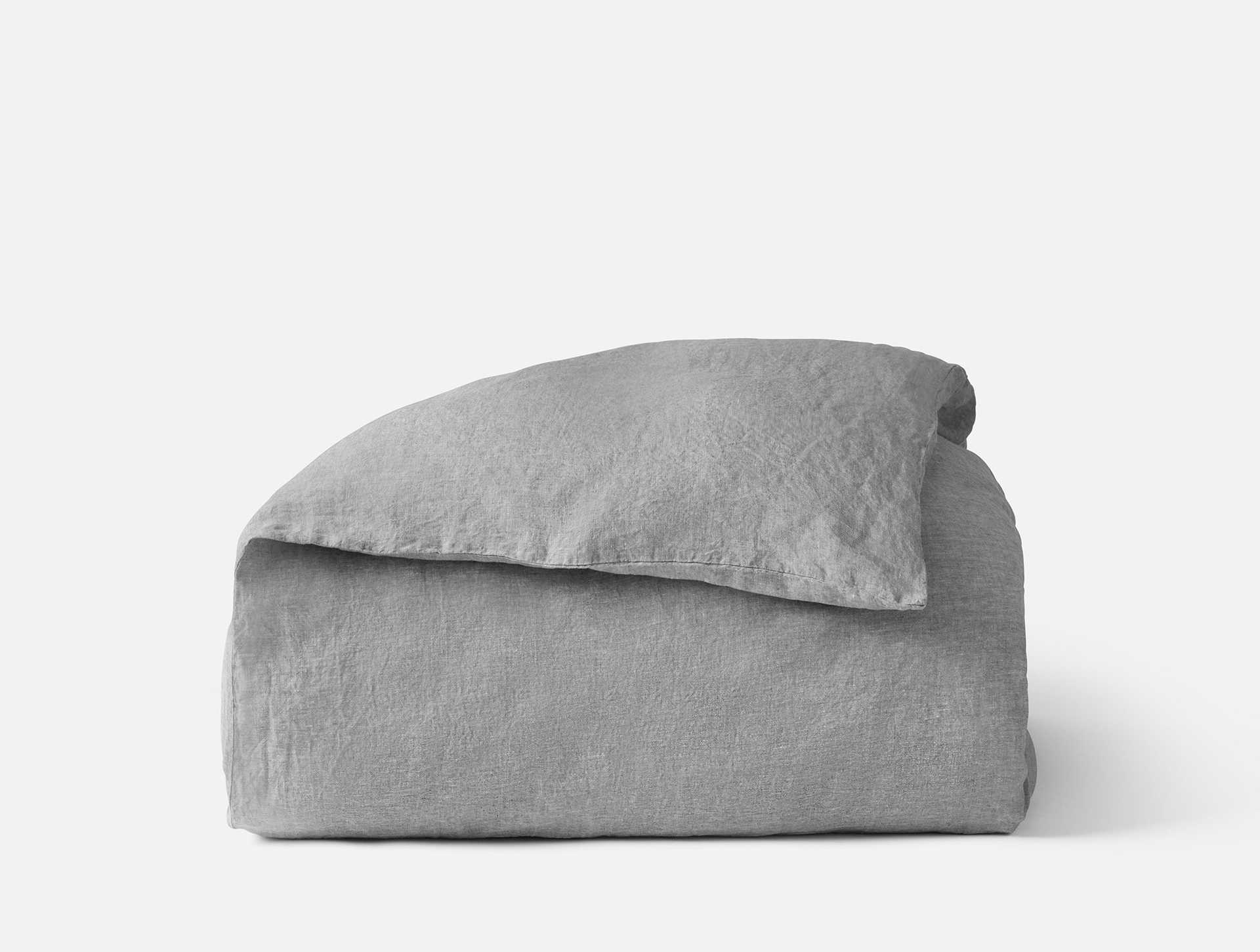
The shell fabric can also influence how a comforter feels. A tightly woven shell helps contain fine down, while the fabric’s hand, weight, and breathability contribute to the overall impression. A duvet cover adds another layer between the sleeper and the insert; its fabric and thickness can subtly change the feel of the finished bed. None of these details replaces the warmth specification, but together they shape comfort.
Which construction should you choose?
Start with the way you sleep, not with the most impressive-sounding construction name. If you tend to sleep warm, prefer a lighter covering, or keep the bedroom comfortably heated, a sewn-through comforter may be a sensible fit. Its lower-profile shape can feel less enveloping, and the stitched grid offers a tidy, classic look.
If you are a cold sleeper, live in a colder climate, or want a fuller layer with more room for down to loft, consider a baffle-box design. Its internal walls can support loft across the filled sections and reduce the narrow, compressed lines associated with direct stitching. Check the stated warmth level and fill details before assuming it will suit your needs.
For shared beds, construction is only one part of the decision. If one sleeper runs hot and the other cold, a single comforter may not satisfy both. Different sleepwear, separate blankets, or a lighter comforter with an additional layer available can make temperature adjustments easier. The best bedding arrangement is the one that lets each person stay comfortable without wrestling the covers all night.
Think about how you like a bed to look and feel during the day, too. A baffle-box comforter often presents a generous, rounded loft. Sewn-through styles may lie closer to the bed and create a more restrained silhouette. Neither is inherently more elegant; it is a matter of taste and how the comforter layers with your sheets, cover, and blankets.
Questions worth asking before you decide
- What warmth level is specified? Look for the maker’s intended use or warmth category, not construction alone.
- How much fill does it contain? Fill weight, when listed, helps put loft and warmth into context.
- What does the fill-power number describe? It is a measure of down loft, not a direct rating of the comforter’s total warmth.
- Is the comforter sized correctly? Coverage and the sleeper’s ability to tuck in the sides influence how warm it feels.
- What does the care label recommend? Down comforters may require specific washing, drying, or professional-care instructions.
- Does it include loops or corner ties? These can help secure an insert inside a duvet cover and reduce bunching during the night.
Construction details are useful, but questions about care and fit are practical ones. A comforter that slides inside its cover or proves difficult to maintain may be less satisfying in daily life, even if its warmth is exactly right. Follow the manufacturer’s care label, especially for down, and make sure the comforter can dry thoroughly after any permitted washing.
A note on shifting, upkeep, and long-term comfort
Both designs divide the comforter into sections to help manage fill. That does not mean the down can never move: regular use, storage, and laundering can affect how it settles. Gently shaking and airing a comforter according to its care instructions may help it regain a more even appearance. Avoid forceful handling or improvised cleaning methods that conflict with the label.
In a sewn-through comforter, the stitching itself defines the compartments. In a baffle-box design, the internal walls help separate them while allowing more depth. Either way, quality materials and careful construction matter. Look for even-looking panels, secure seams, and clear information about the fill and care. A product description that explains its construction gives you more to work with than a warmth adjective by itself.
Using a washable duvet cover can help shield an insert from everyday oils and spills, potentially reducing how often the comforter itself needs attention. The cover does not change the construction inside, but it can make a bedding setup easier to maintain. For comforters that are spot-clean-only or require specialist care, that routine protection is especially useful.
The bottom line: choose the feel, then check the facts
Baffle-box and sewn-through construction solve the same basic problem—keeping down distributed across a comforter—but they do it differently. Sewn-through stitching joins the shell layers directly, creating a streamlined structure that may have thinner lines at the seams. Baffle-box construction uses internal walls to create deeper compartments, giving the down more room to loft and often producing a fuller profile.
That difference can influence how warmth feels across the bed, but it cannot predict comfort on its own. A baffle-box comforter is not automatically too warm, and a sewn-through one is not automatically too cool. Fill amount, fill power, size, fabric, bedroom conditions, and personal temperature preferences all have a say in the final verdict.
If you crave an airy, tailored layer, begin by exploring sewn-through designs with a warmth rating suited to your room. If you want visible loft and a more generously insulated feel, investigate baffle-box options and compare their fill specifications. Then read the care guidance and make sure the dimensions suit your bed.
The right comforter is less about choosing the “best” stitch and more about finding the combination that feels good night after night. When construction, warmth, and personal preference line up, the result is the kind of bed you look forward to climbing into—without waking up to a cold seam, a too-heavy layer, or a duvet that has wandered off to one side.